EO Discover 2.0: The platform for smarter leak management.
EO Discover 2.0: The platform for smarter leak management.
Let’s face it— infrastructure assets don’t last forever. Over time, wear and tear from soil moisture fluctuations leads to erosion, seepage, and eventual structural damage. That’s where EarthWorks comes in, offering the industry’s first ever satellite-based solution for detecting subsurface soil moisture risks using L-band SAR satellite technology.
EarthWorks uses satellite soil moisture monitoring to help you proactively manage risk, extend asset lifespan, and avoid costly repairs. Our technology delivers pinpoint accuracy, allowing you to track soil moisture across vast areas without relying on guesswork.
Whether you’re overseeing dam safety, road maintenance, or other earthworks assets, EarthWorks provides the critical insights needed to make smarter decisions and keep your operations running smoothly.
Mine operators use EarthWorks to see where water is seeping from waste dams and production pipelines, collecting under roads and heavy equipment sites, and weakening hillsides. The largest operations, including tailings (waste) dams can be continually monitored to improve design and safety, anticipate slope failures, and document compliance.
Extreme weather events have put populations living in the flood hazard zones of dams and levees at particular risk. EarthWorks provides mine and levee operators with soil moisture maps that highlight areas of excess moisture and seepage, helping to prevent disaster by giving operators time to study and mitigate problems early.
Soil moisture can threaten rail lines from below and above. Moisture underneath or adjacent to rail beds can weaken the soil to the point it gives way. Moisture in the hillsides above railways can cause the hill to slip onto the tracks, a known cause of several noted rail disasters. A map of soil moisture along the length of the line can prevent these problems.
EarthWorks gives transportation managers an overview of moisture concentrated under paved roadways, the surrounding rights of way, and adjacent hillsides above and below. The service is used to conduct predictive and corrective maintenance, evaluate and improve drainage systems, anticipate sinkholes and other failures, and reduce maintenance costs.
Owners and managers of large property installations use EarthWorks to locate and assess underground moisture beneath parking lots, roadways, sidewalks, and other paved surfaces. Likely failure locations are mapped out so owners can mitigate problems prior to more extensive damage.
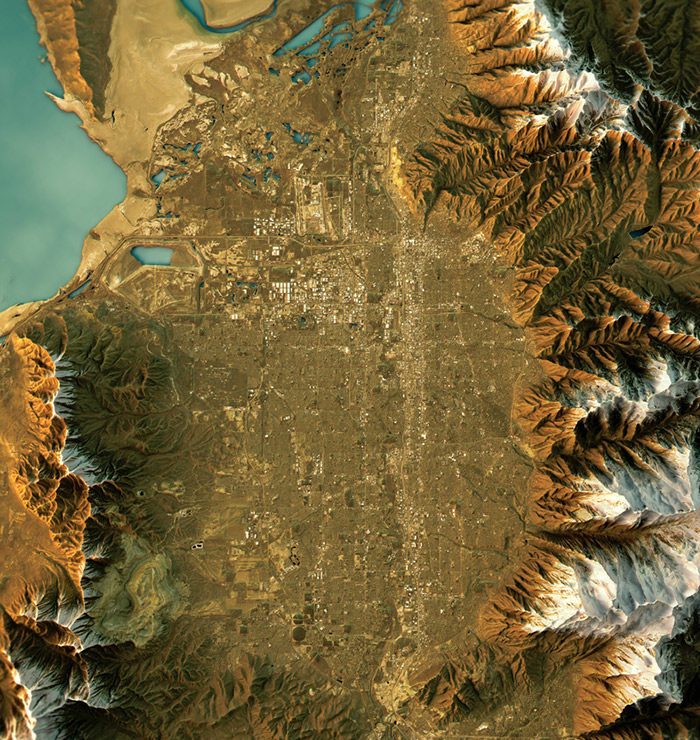
EarthWorks is the first satellite soil moisture monitoring solution designed to empower better decision-making for infrastructure resilience. It equips engineers and managers with data-driven insights to identify and mitigate soil moisture risks. Capable of assessing up to 64 km (40 linear miles) and 3,600 sq km (1,400 square miles), EarthWorks significantly boosts resource allocation efficiency in infrastructure maintenance. Operating from 390 miles above the Earth, its satellite-based technology utilizes synthetic aperture radar (SAR) to detect soil moisture up to 10 feet (3m) below the surface. By tracking changes over time, EarthWorks helps extend the lifespan of infrastructure.
ASTERRA EarthWorks helps customers meet the United Nations’ Sustainable Development Goals 9 and 13, for resilient infrastructure, innovation, and combating climate change.
The technology behind EarthWorks marks the biggest innovation in soil moisture detection in more than 80 years. By mapping excess soil moisture near or under dams, levees, roads, railways, and mining operations from space, EarthWorks help can help prevent structural failure in the near term and provide data for building in long-term resilience.
EarthWorks helps cities and communities located in regions prone to landslides and geological hazards or near mining facilities or dams and levees. By providing early warning and risk assessment based on underground soil moisture data, EarthWorks contributes to ensuring the safety of local populations.
Many of the dams and levees that manage water and prevent flooding are over 50 years old, some much older, while the number of people living in their flood hazard zones has grown to the millions. As extreme weather events caused by climate change put additional stress on these structures, EarthWorks can show managers where moisture-related vulnerabilities create risks so that lives and property can be protected.


