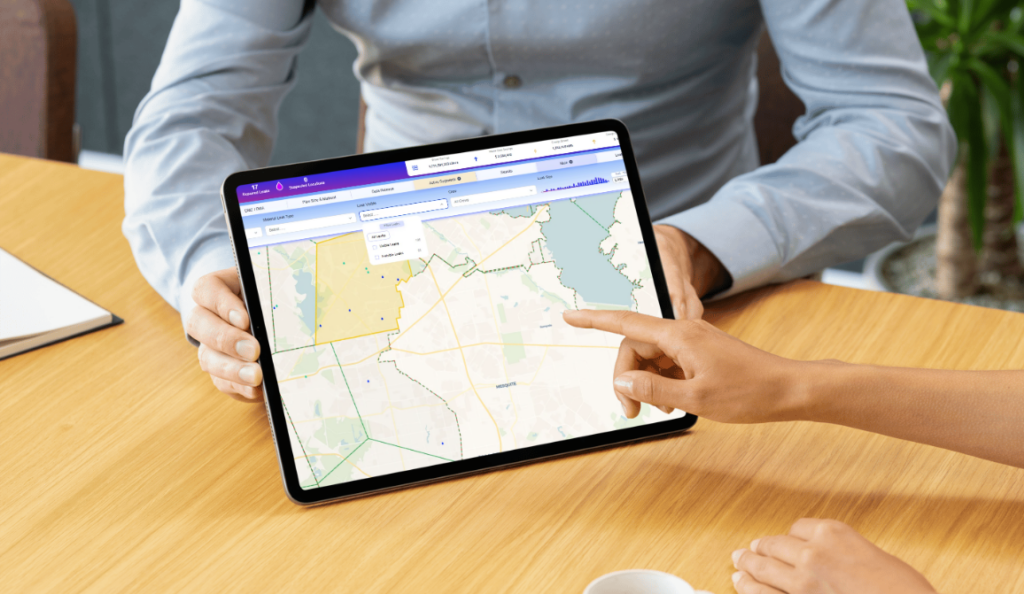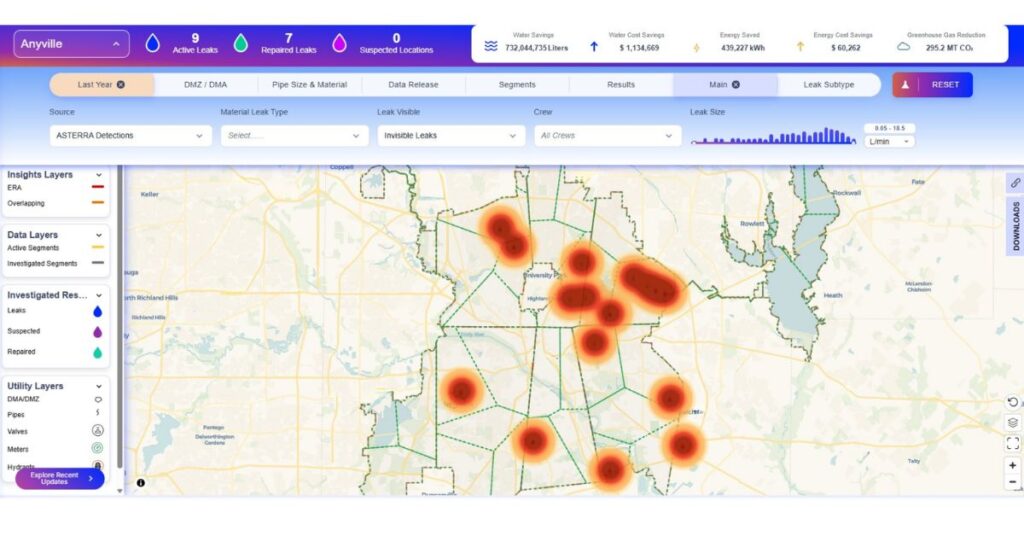
Every collections manager has stood in front of the same map. It shows hundreds of miles of force mains and gravity sewers, much of it 30 to 80 years old (a clear sign of aging water infrastructure) and a budget that covers a fraction of it. Somewhere in that network, pipe is exfiltrating into the surrounding soil. Somewhere else, a section is quietly heading toward a structural failure that will turn into an emergency call at 2 a.m. The question isn’t whether problems exist, but where.
For most utilities, that question gets answered in the same ways it always has: complaint history, staff experience, pipe age, and whatever gravity sewer segment came up last on the CCTV rotation. It’s not a bad method, but rather, an incomplete one. These efforts increasingly become more difficult as inspection budgets tighten, crews continue to stay lean, and regulators scrutinize the processes around how utilities manage sanitary sewer overflow (SSO) risk and non-revenue water (NRW) loss across their systems.
Prioritization is the real constraint
CCTV crews, acoustic monitoring, and manual inspection all work. None of them are bottlenecks in and of themselves. The difficulty is that no utility can inspect its entire wastewater collections system every year, so someone must decide, with limited information, which few miles get attention this cycle and which few hundred don’t.
That decision usually falls to a Collections Manager, a Wastewater Superintendent, or an Asset Management Manager who is also responsible for keeping the system running day to day. They’re not short on urgency, but on a network-wide starting point: some way to see the whole system’s condition risk before committing crews, cameras, and traffic control to any one section of it.
Three questions collections teams can’t confidently answer
- Where in our network is exfiltration most likely happening right now?
The focus shouldn’t be which pipes are oldest, or which basin had the last complaint, but which segments currently show signs of structural issues. Identifying which segments are at risk of pipe failure because soil moisture is accumulating and weakening the ground support, and which segments increase environmental and community risks (for example, contamination risks), should be the determining factor in answering this question. - Which segments deserve this year’s rehabilitation dollars?
With capital plans stretched across 100 to 1,500-plus miles of pipeline, a wrong guess doesn’t just waste budget, but leaves the actual risk unaddressed for an additional year. - How do we show a rate board, a council, or a regulator that we’re being proactive?
Consent decrees and capacity management plans increasingly expect evidence of risk-based planning, not just a list of pipes replaced after they failed. Addressing this question means shifting from reactive to proactive decision-making.
These are virtually timeless questions. But what’s changed is that utilities now have an option besides guessing or waiting for the next risk assessment or overflow to answer them.
Adding a network-wide condition intelligence layer
Satellite-based radar has a relatively new use for wastewater management, but it builds on years of satellite leak detection and water loss detection work in potable water systems, empowering collections teams with a network-wide condition intelligence layer to complement their existing operations. The approach behind ASTERRA Recover, SAR satellite imaging, is representative of how this works. An L-band synthetic aperture radar (SAR) satellite passes over an entire service area and captures a radar signature sensitive to soil moisture. Because that signal responds differently to water that has exfiltrated from a wastewater pipe than to ordinary groundwater, an algorithm can flag soil moisture anomalies near collection system assets that are indicative of exfiltration, pipe breaks, or other structural issues.
Instead of choosing where to inspect based on age and memory, a collections team opens a map that already shows where a satellite pass detected a probable signal. These insights inform proactive planning, adds to condition intelligence data, helps with environmental protection planning, and aids inspection prioritization. Satellite-based detection doesn’t replace the inspection, but it does replace the guesswork around where the inspection should start.
Where satellite-based leak detection fits
While satellite screening does not yet identify infiltration and inflow (I&I) directly, nor does the pinpointing or validation, it is an effective complement. It also adds value to other IoT, AI, digital twins, and cloud centralization solutions that provide a sensing layer, infrastructure layer, and “brain layer” to condition intelligence assessments. It’s best understood as a new layer in the asset management stack, sitting upstream of condition assessment and inspections rather than replacing them. It helps identify where the tape measure, the camera, and the crew go first. Its key benefit is that it’s proactive, non-invasive, and offers a system-wide insight, allowing visibility to one’s asset infrastructure in a single satellite pass that otherwise would have taken a year of inspection budget and resources to complete.
Shifting to a proactive approach
Funding pressure on wastewater utilities isn’t easing. Neither is the focus of how collection systems are managed. Consent decrees, capacity management requirements, and workforce shortages are pushing utilities toward risk-based planning. In that environment, the utilities that move into a proactive mindset aren’t necessarily the ones spending more on inspection. Instead, they’re the ones spending their existing inspection budget on the miles that need addressing. That’s the shift satellite-based condition intelligence represents. Asset management has always started with an inspection. Increasingly, it is starting before one, using a network-wide screening pass that turns “where do we look first” from an educated guess into an informed starting point.
For a closer look at how this plays out in the field, see our latest water utility case study on satellite-based leak detection and non-revenue water reduction.
Let’s Talk More About Wastewater Management at WEFTEC 2026
We will be at WEFTEC, booth 2157, to discuss our potable water leak detection and wastewater exfiltration capabilities. If you’re headed to WEFTEC in New Orleans, happening September 26-30, 2026, stop by to meet with the team and discover how you can create a more sustainable legacy using ASTERRA.