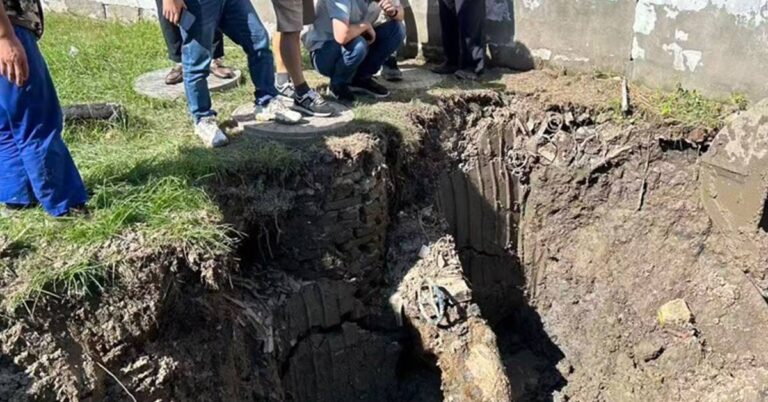
Sewer leak detection helps utilities identify where untreated wastewater may be escaping from underground pipes, joints, manholes, and service connections. CCTV cameras examine pipe condition, smoke and dye tests reveal potential flow paths, and sampling and flow analysis provide additional evidence. Satellite-based screening helps utilities narrow larger networks into areas worth investigating first. Field crews still need to verify the affected asset and defect before planning a repair.
A hidden sewer leak is vastly different from a leaking water main. While water main leaks typically involve treated water escaping from a pressurized distribution system. Sewer leaks can allow untreated wastewater to move through damaged pipes or joints and into surrounding soil or groundwater. According to the U.S. Environmental Protection Agency (EPA), exfiltrated sewage may contain pathogens, nutrients, suspended solids, and other pollutants.
The difference also changes how crews find the problem. Most sanitary sewers carry wastewater by gravity rather than under continuous pressure, so the pressure-loss and acoustic signals familiar to drinking-water utilities are not always available. Pipe depth, material, wastewater flow, groundwater levels, and access through manholes all influence the investigation. Pressurized sewer force mains are an important exception.
For municipalities, the goal is to determine where to investigate, what kind of evidence is needed, and which defects require attention. In this article, we are comparing common sewer leak detection methods, explaining the risks of exfiltration, and showing how satellite screening can fit into an existing inspection program.
Key Takeaways
- Sewer leaks present a different risk: Exfiltration means untreated wastewater escapes into surrounding soil or groundwater, rather than treated water being lost from a drinking-water main.
- Each detection method answers a different question: CCTV reveals pipe conditions, smoke and dye testing trace pathways, and satellite screening helps prioritize larger areas.
- Gravity sewers need a different approach: Conventional water main pressure and acoustic methods do not transfer directly to most gravity-flow systems.
- Satellite results guide fieldwork: Suspected exfiltration locations still require on-site testing and confirmation.
- Project results show potential: In a 2020 Florida study, four of five (80%) ASTERRA-identified force-main sites showed signs of wastewater contamination through soil and water sampling.
What Is Sewer Leak Detection?
Sewer leak detection is the process of identifying defects that allow wastewater to escape from collection pipes, joints, manholes, or service connections. Utilities combine inspections, testing, monitoring, and subsurface screening to identify possible leaks, verify their source, assess the risks, and decide where to repair or rehabilitate the network.
There are three related terms worth separating:
- Exfiltration: Wastewater moves out of the sewer through a crack, failed joint, damaged connection, or another defect.
- Infiltration: Groundwater moves into the sewer through a defect.
- Inflow: Stormwater enters the sewer more directly, such as through an improper connection, open manhole, or connected drain.
The direction of leakage partly depends on the water level inside the sewer compared with groundwater outside it, as the EPA explains. Utilities may need to address all three conditions, but sewage leak detection for exfiltration focuses on finding where wastewater is escaping and what that could mean for soil and pipe stability, groundwater, infrastructure, and public health.
Why Sewer Leaks Are Harder to Detect Than Water Main Leaks
A water main leak may create an audible signal as pressurized water escapes. A sewer defect may not. Because many sewer pipes are only partially full and operate under gravity, wastewater can leave a pipe without giving crews the same clear pressure or sound clues. Detection also depends on groundwater conditions, how deep the pipe is buried, and whether crews can access the suspected section.
Gravity Sewers Do Not Always Produce Useful Acoustic Clues
Most sanitary sewers are designed to move wastewater downhill without continuously pressurizing the pipe. As the EPA explains, that operating principle differs from a pressurized drinking-water main. Water main acoustic equipment listens for noise produced by escaping pressurized water, but the same technique is not a direct substitute for sewer-specific inspection.
For gravity sewers, a partially full pipe or surrounding groundwater can make signs of outward leakage even less obvious. That is why utilities often rely on CCTV cameras, smoke testing, dye testing, and other approaches that examine the sewer itself or trace possible flow paths. Force mains are different: because they carry wastewater under pressure, the appropriate investigation strategy may also differ.
Pipe Depth and Access Affect the Inspection Plan
Maintaining a downhill slope can place sewer lines well below the surface. EPA guidance describes conventional sewer depths commonly averaging approximately three to 6.5 feet, while terrain and design requirements can lead to deeper installations.
Most in-pipe inspections begin at manholes and proceed along individual sections. If the sewer runs beneath a road or other built infrastructure, crews may also need traffic control, specialized inspection equipment, and wastewater-flow management. The EPA notes that CCTV work may be easier during low-flow periods or after temporarily restricting flow when wastewater could block the camera’s view.
In practice, even when a utility knows which section to inspect, the access and preparation needed can influence the time and cost of confirming the defect.
Common Sewer Defect Detection Methods
No single method provides every answer. Some tools show what is happening inside a pipe. Others trace connections or help a utility decide which parts of a larger network deserve attention first. Combining the right methods often gives crews a clearer path from a suspected problem to a verified repair.
CCTV Camera Inspection
How it works: Closed-circuit television (CCTV) inspection sends a remotely operated camera through a sewer between access points. The camera records pipe walls, joints, and service connections, helping crews identify cracks, displaced joints, corrosion, root intrusion, blockages, and visible infiltration.
Smoke Testing
How it works: Crews introduce manufactured smoke into a sewer through a manhole, then check where the smoke appears above ground. It may emerge through damaged pipes or manholes, pavement cracks, landscaping, drains, or improperly connected roof and foundation drainage systems.
Dye Testing
How it works: Technicians introduce a visible fluorescent dye into a selected drain, water source, or pipe connection. They then watch nearby sewers, storm drains, manholes, or other observation points to see where the colored water travels.
Satellite-Based Subsurface Screening
How it works: Satellite detection uses radar observations and specialized analytics to look for subsurface signals associated with potential wastewater exfiltration. Rather than putting a camera or technician into every sewer segment, satellite-based screening can provide a macro perspective of your collection systems and where moisture driven risks may be. This, in turn, can help identify where a field investigation may be worthwhile.
At ASTERRA, we use synthetic aperture radar (SAR) data and artificial intelligence (AI) to help identify suspected wastewater exfiltration, as well as other moisture anomalies that may pose structural risk to a utilities asset network. While satellite subsurface screening cannot detect infiltration or inflow, it can provide insights to compliance and environmental risks. This is an upstream screening approach: it helps utilities understand the potential breadth of risk and decide where to look first, while ground crews use appropriate inspection or sampling methods to determine whether a specific sewer asset is compromised.
ASTERRA has serviced wastewater customers globally, including in the United States, the United Kingdom, Israel, and more. These are company-reported examples of where the approach has been used, not independent performance benchmarks.
Signs of Exfiltration and Environmental Risk
One of the challenges with sewer exfiltration is that it may never produce a visible surface discharge. Sewage odors, unusually damp ground, soil settlement, or voids near a sewer alignment can give crews a reason to investigate. However, none of these signs proves that wastewater is escaping from a particular pipe.
The environmental concern is what untreated sewage can carry. EPA exfiltration research identifies pathogens, nutrients, suspended solids, and other pollutants that may enter surrounding soil and groundwater. Damage to a sewer can also affect the ground around it. As City of Tacoma guidance notes, soil may erode into defective pipes, potentially contributing to underground voids or sinkholes.
There can also be compliance implications. In the United States, the EPA administers the Clean Water Act’s National Pollutant Discharge Elimination System (NPDES) program for regulated pollutant discharges associated with municipal wastewater facilities and collection systems. Whether a particular wastewater release creates a regulatory obligation depends on its pathway, the applicable permit, and state requirements.
For a utility, this means the investigation is not only about locating a damaged pipe. It is also about understanding the possible environmental consequences, documenting findings, and deciding how urgently to respond.
How Municipalities Choose a Sewer Defect Detection Approach
The right method depends on the question your team needs to answer. Are you trying to inspect the condition of a known pipe, trace an improper connection, or find a sensible starting point across a large network? Those are different jobs, and they may call for different tools.
Network age and condition:
An older network may deserve closer attention, but age alone does not tell you which pipe is failing. Material, inspection history, soil conditions, previous blockages, and the consequences of failure all matter. EPA condition-assessment guidance supports prioritizing inspections according to risk, pipe characteristics, and likely failure mechanisms.
Known problem or network-wide screening:
CCTV is a practical choice when crews need to inspect a selected pipe from the inside. Smoke testing can reveal surface-connected defects or improper connections, while dye testing helps trace a suspected flow path. Satellite screening fits earlier in the process when the utility needs to prioritize possible exfiltration areas across a wider network before assigning field crews.
Budget and field capacity:
The initial screening or inspection price is only part of the cost. Consider sewer cleaning, access, traffic control, labor, equipment, data analysis, reporting, and repeat verification work. Broad screening may help guide crew activity, but the utility still needs the staff, equipment, and budget to investigate the resulting locations.
Regulatory deadlines:
Permits, consent decrees, or state-directed corrective actions can affect which assets must be inspected, how findings are documented, and when work must be completed. The detection approach should produce the type of evidence the applicable regulator requires within the relevant deadlines.
In many programs, the most practical approach is to combine methods. Satellite screening may help identify where to start, while CCTV, smoke, dye, sampling, or other field methods help confirm what is happening at a particular location. The technologies are complementary; one does not automatically replace the others.
Real-World Results: Florida Wastewater Investigation
A 2023 United Kingdom wastewater project reported by ASTERRA shows how broad-area screening can lead to targeted field checks. The project examined five satellite-identified sites of probable exfiltration along force mains. Soil and water sampling found signs of wastewater contamination at four of the five sites.
That is an 80% finding within this five-site investigation, not a universal accuracy rate for satellite wastewater screening. The operational value is more specific: satellite insights helped identify locations where crews could focus sampling and verification, rather than treating every part of the system as an equal starting point.
Frequently Asked Questions
What Is Satellite Wastewater Detection or Sewer Leak Detection?
Sewer leak detection helps utilities identify defects that may allow untreated wastewater to escape from collection pipes, joints, manholes, and service connections. Inspection, monitoring, targeted testing, and network screening are used together to find likely problem areas, verify the affected asset, and plan repair or rehabilitation. New technology like satellite-based wastewater detection provides the macro subsurface screening of moisture anomalies near pipe line assets and collection systems that may be indicative of exfiltration, pipe break, soil stability risks, or compliance / environmental risks. This new category enables network wide intelligence that can help prioritize inspections and understand the breadth of a utilities potential risks.
How Do Utilities Detect Underground Sewer Leaks?
Utilities use CCTV cameras, smoke testing, dye testing, flow monitoring, soil or water sampling, and subsurface screening. CCTV examines the inside of a pipe; smoke and dye tests help trace certain connections and pathways; and satellite analysis can prioritize areas across a larger network. The method depends on what the utility already knows and what needs to be confirmed in the field.
What Is Sewer Exfiltration?
Exfiltration is wastewater moving out of a sewer through a crack, failed joint, defective manhole, or damaged connection. Infiltration is the opposite: groundwater moves into the sewer. Whether escaping wastewater affects nearby soil or groundwater depends on local hydraulic and subsurface conditions. Whether locations of exfiltration can lead to infiltration has yet to be proven, but the hypothesis is where there is a hole there is an opening for bidirectional flow.
Can Satellite Technology Detect Sewer Leaks?
Satellite-based SAR analysis can help identify subsurface signals associated with possible wastewater exfiltration and other soil moisture anomalies. ASTERRA reports using this approach to screen broad areas and give utilities probable locations to investigate. Satellite findings are not proof of an active leak, break, defect, or exfiltration site, so crews still need appropriate field methods—including sampling, CCTV, or other tests—to verify the suspected location.
Prioritize Sewer Investigations with ASTERRA
ASTERRA Recover for Wastewater helps utilities screen broad sewer networks and focus field investigations on areas with possible compliance and environmental risks, soil stability risks, and pipe defect risks (exfiltration, crack, burst pipe, etc.) . Rather than beginning every investigation from scratch, teams can use those insights to plan where to inspect and what to verify next. Request a demo to discuss your network coverage, field-verification needs, and how satellite screening could fit into your existing wastewater inspection program.